
The Modern Mixer Grinder: Turning a Kitchen Appliance into a Functional Showpiece
Studio
GDD Industrial Design Studio, Noida
Category
Kitchen Appliances
Expertise
ID, CMF, DFM
Objects
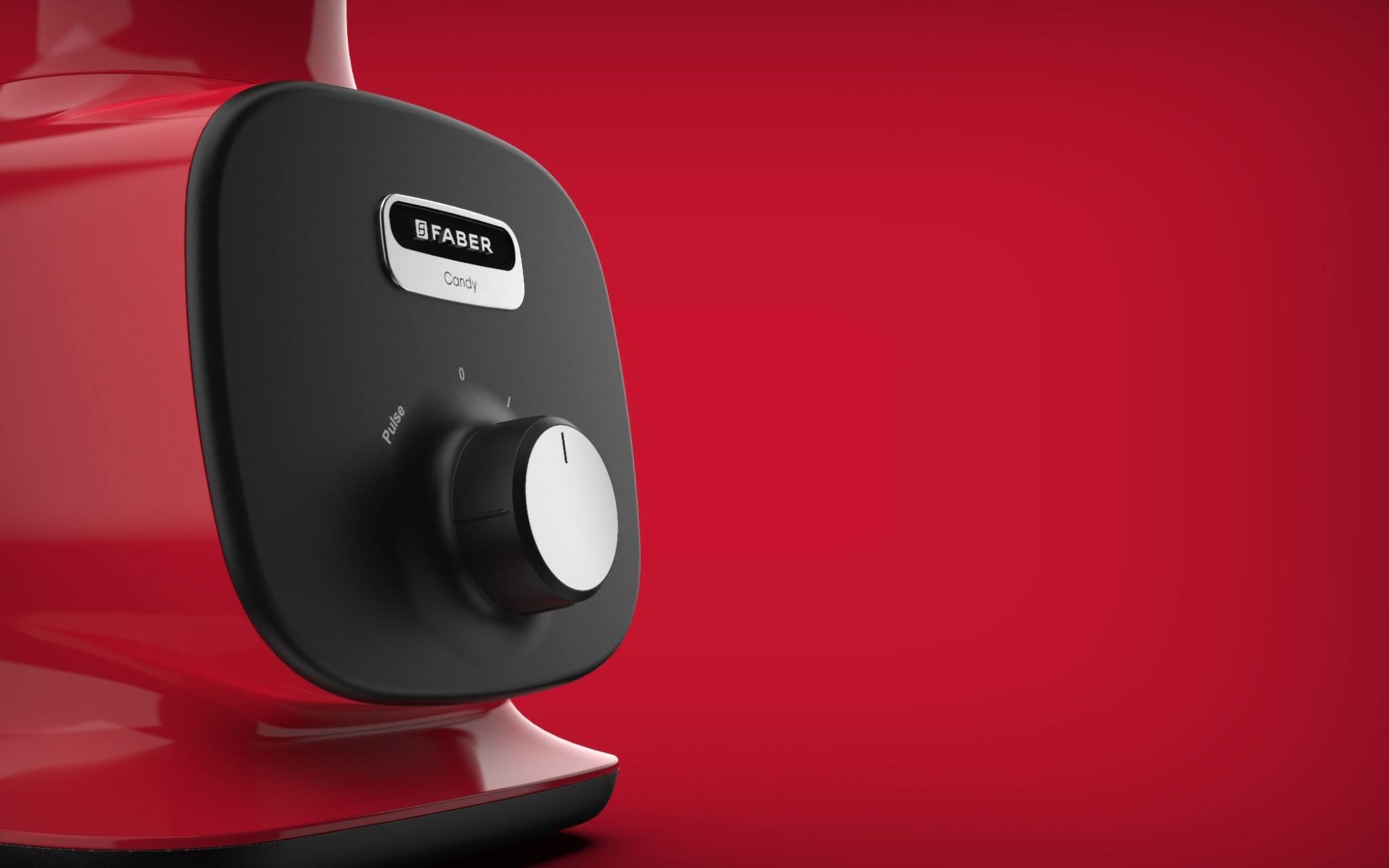
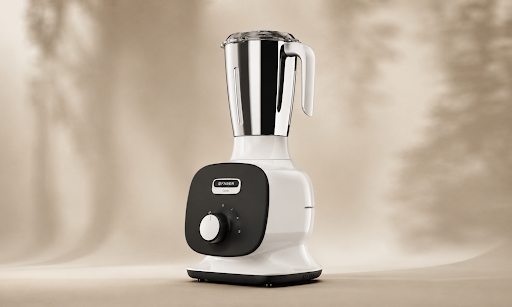
Workstation, Faber Candy
The Modern Mixer Grinder: Turning a Kitchen Appliance into a Functional Showpiece
“In a sea of sameness, where every brand is producing the same form, the same jar, the same body — the design edge is the only differentiator. GDD’s job is to make that edge visible, manufacturable, and valuable.”
Rethinking Indian Kitchen Appliance Design: Evolution Over Innovation
Why Mixer Grinder Design in India Has Stayed the Same - and Why That Is Not a Failure
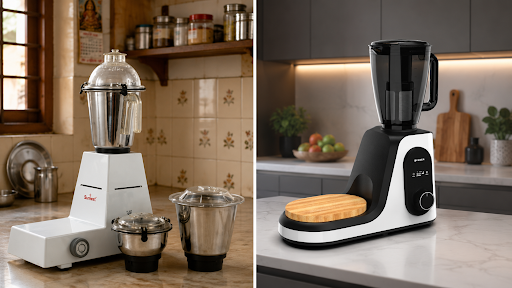
The mixer grinders designed for the Indian kitchen have looked more or less the same for three decades. Same jar geometry. Same motor housing proportions. Same basic operating logic. To a casual observer this looks like stagnation. To a designer it looks like a category that found its functional equilibrium early and held it.
Premium Mixer Grinder Design: Refining a Category Instead of Reinventing It
The mixer grinder is the safety pin of kitchen appliances. It does not need to be reinvented. It needs to be refined — with enough precision and enough aesthetic intelligence that one product on a shelf commands attention and commands a price premium over the identical product next to it.
This is exactly where GDD operates. Not reinventing the category. Elevating it. The design brief is not “make something nobody has seen before.” The brief is “make something nobody can ignore.”
User-Centric Industrial Design for Demanding Indian Kitchen

Designing a Mixer Grinder for Real Indian Kitchen Conditions
The Indian kitchen is not a laboratory, it is a battlefield. GDD’s design process for kitchen appliances begins not at the drawing board but in the kitchen itself. And what the Indian kitchen reveals immediately is that it is one of the most demanding operating environments for any product.
Ergonomic Mixer Grinder Design
Within a two-hour cooking session, a mixer grinder will be handled with wet hands, oily hands, turmeric-stained hands, and hands that have just handled a hot vessel. Jars will be swapped under time pressure while three things are cooking simultaneously. The dial will be turned without looking at it. The jar lid will be held down with one hand while the other steadies the body. This is not edge case usage. This is Tuesday morning in every Indian home.
“The design decisions that matter most in a mixer grinder are not visible in a product photograph. They are in the grip geometry of the jar, the tactile feedback of the speed dial, the pour angle of the spout, and the IP rating of every electrical interface that a wet hand might touch.”
Premium Mixer Grinder CMF Design: Four Decisions That Matter
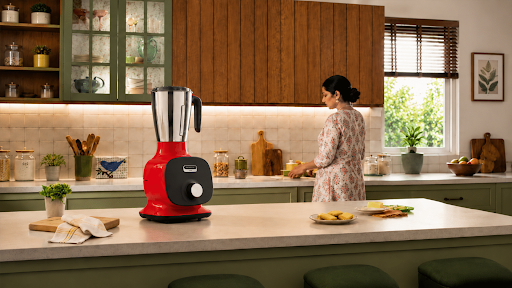
These observations directly inform GDD’s design decisions. Jar grip profiles are designed for wet-hand operation — wider knurling, deeper grip channels, and a jar body taper that sits naturally in the palm regardless of hand size. Speed dials are designed with tactile detents that communicate position without visual confirmation. Spout geometry is validated for pour angle and drip behaviour across all three standard jar volumes.
Chrome Detailing
Both a ₹3,000 and an ₹8,000 mixer grinder may use chrome on the body. The difference is in the proportion of the chrome band, the radius at which it transitions to ABS, the edge sharpness, and whether the chrome reads as intentional or applied. GDD treats every CMF decision as a proportion exercise before it is a material exercise.
Counter Footprint
The Indian kitchen counter is contested real estate. Every square inch a product occupies must earn its place. For the Workstation mixer grinder, GDD challenged the assumption that a larger footprint is a negative. If the footprint is larger, what additional functionality does it enable? The answer shaped the entire product brief.
Wire Management
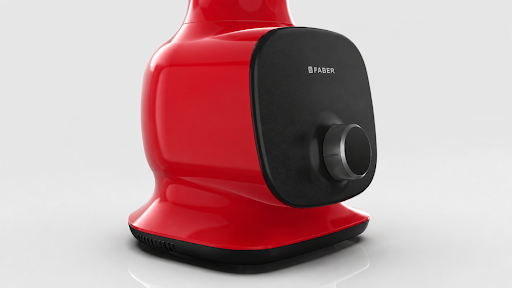
For the Faber Candy mixer grinder, GDD resolved one of the most persistent frustrations of small appliance ownership — the power cord. The product silhouette was designed so the cord wraps naturally around the neck of the body, contained by the stepped detail, stored without a separate accessory, and invisible when the product is on display. Function and form resolved simultaneously.
Sculptural Presence
The modern Indian home no longer needs decorative showpieces. The mixer grinder on the counter IS the showpiece. GDD designs kitchen appliances that hold a sculptural value when not in use — products that a homeowner is proud to leave out, not compelled to hide in a cabinet.
2 hr
Kitchen usage session GDD designs for
4
Simultaneous design constraints resolved
IP44+
Electrical interface protection standard
3
Jar volume profiles validated per brief
Redefining Premium CMF Design with Indian Heritage and Craft DNA
Premium Design Language: Redefining Premium for the Indian Kitchen, on Indian Terms
For too long, premium in Indian product design has been defined by a Western reference point. The Braun aesthetic. The Smeg silhouette. The Scandinavian material palette. GDD’s position is different, and it is a position we hold with conviction.
“India has a history of art, architecture, craft, and creative expression that is as rich as any design tradition in the world. The Indian consumer does not need the West to define what premium looks like. GDD is actively working to bring Indian craft language onto everyday appliances, because that is where premium design for India actually lives.”
This means exploring how Indian handicraft references — the geometry of Warli, the inlay traditions of Rajasthan, the brass work of Moradabad, the weave patterns of Varanasi — can be translated into surface treatments, CMF decisions, and form language on kitchen appliances. Not as decoration. As design DNA.
Creating Market Differentiation via Indian Handicraft
A hint of Indian craft on an otherwise contemporary appliance form does not make the product look traditional. It makes it look irreplaceable. That is the premium design language GDD is building towards.
Balancing Cost Constraints and Design Integrity in Product Development
Product Development Cost Constraints: The Conversation No Studio Will Have, but GDD Always Does
Every mixer grinder brief comes with a cost target. And every cost target, at some point, comes into conflict with a design decision that makes the product worth the price it is meant to command.
Design as per Manufacturing Costs
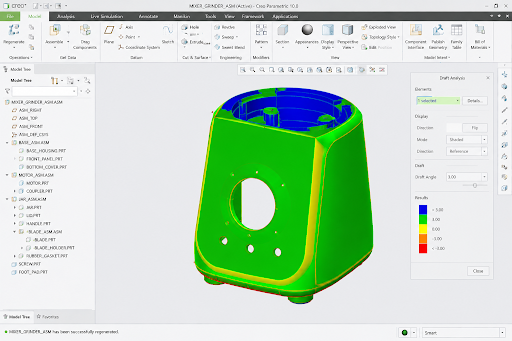
GDD’s approach to this conversation is non-negotiable. When a cost constraint threatens design integrity, the client is shown two versions. The full-glory version — the product at the top of its game, with every CMF decision, every surface treatment, every detail resolved. And the stripped-down version — the product at its minimum viable premium, with every cost reduction applied.
“The client owns that decision. Not the studio. But even the stripped-down version must hold its head up. A GDD product that has been value-engineered should still look like it was designed with intent, not like something was taken away.”
This discipline — presenting the trade-off clearly and protecting the design integrity of both options — is what builds long-term client trust. It is also what ensures that GDD’s name is never on a product that compromises without knowing it has compromised.
The Future of Modular Kitchen Appliances and Smart Integration
Where Indian Kitchen Appliance Design Is Headed, and Why Design Leads It
The future of the Indian kitchen is integration. Appliances that communicate with each other, that anticipate usage patterns, that remove friction from the cooking process entirely. In that future, the kitchen moves from a space of chaos to a space of leisure — where the only reason a person is present is because they love the act of cooking, not because the process demands their constant attention.
GDD is designing for that future today. Every brief that comes through the studio is evaluated not just against current market requirements but against where the category will be in five years. The products we design now will still be on kitchen counters then. They need to look like they belong there.
Partnering with an Expert Kitchen Appliance Design Studio in India
Product managers and R&D heads who brief GDD on mixer grinder and kitchen appliance development get a studio that understands the Indian kitchen from the inside — the usage habits, the counter constraints, the cost pressures, and the craft heritage that defines what premium actually means to the Indian consumer. The result is a product that differentiates on shelf, holds its value in the home, and builds the brand trust that drives repeat purchase.
