
Ceiling Fan Design in India: Engineering Cooling Products That Actually Ship
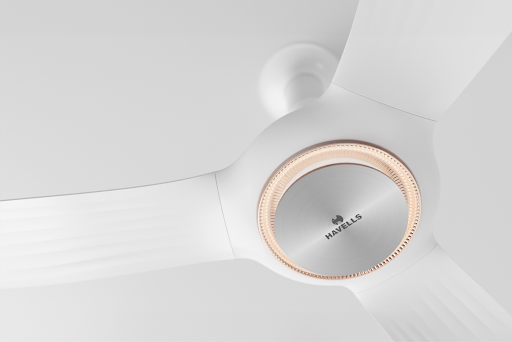
Studio
GDD Industrial Design Studio, Noida
Experience
10+ years
10 years of ceiling fan and cooling product design across Indian manufacturing conditions.
Introduction
“Before a single sketch is drawn, we need to know who is running the injection moulding tool, where the die is being cut, what the draw angle constraints are, and what the gate position does to the blade surface finish. That is not procurement. That is design.”
2. Aligning Ceiling Fan Design Briefs with the Manufacturing Ecosystem
Ceiling Fan Design Briefs: Starting With the Manufacturing Ecosystem, Not Aesthetics
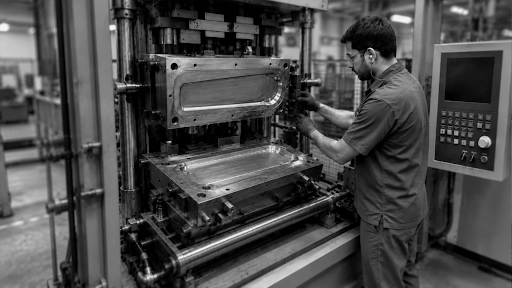
The brief is never just a brief. When a ceiling fan design brief reaches GDD, the first conversation is not about aesthetics. It is about the manufacturing ecosystem that will bring the design to life. Who is the injection moulding vendor? What press tonnage are they running? Are the blades being produced in ABS, HIPS, or a glass-filled PP grade? Is the motor being sourced or developed in-house? What are the UL or BEE star rating requirements the product has to meet?
Ceiling Fan Design and Manufacturing Constraints
These questions are not asked to slow the process. They are asked because the answers define the actual design space.
A blade designed without knowing the moulding vendor's maximum core pull depth is a blade that will require expensive ECO work before it ever goes into production. A motor canopy designed without accounting for the heat dissipation path of the specific motor being used is one that will fail thermal testing.
3. Moving Past Concept Art: Factoring DFM Constraints into Industrial Design
Design for Manufacturing (DFM): Why Concept Art Isn't Design
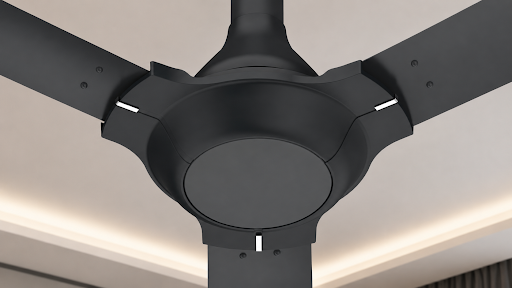
GDD’s position is simple: design that ignores manufacturing constraints is not design. It is concept art. The studios that confuse the two are the ones whose clients end up spending 18 months in ECO cycles wondering what went wrong.
Biomimicry Blade Design: The Albatross Wing Profile in Ceiling Fan Engineering
On a landmark project, the brief demanded a ceiling fan that felt genuinely differentiated in a market saturated with me-too blade profiles. The design direction GDD brought to the table drew from the wing planform of the Wandering Albatross, one of the highest lift-to-drag ratio structures in nature, with a leading edge sweep and trailing edge camber that no production fan blade had attempted.
Industrial Design and DFM Analysis: Resolving Aerodynamics vs. Mould Constraints
The challenge was immediate and specific. Translating the albatross aerofoil into an injection-moulded ABS blade meant managing wall thickness variation across a highly contoured surface, a direct conflict with the moulding vendor’s shrinkage and sink mark constraints. The blade geometry that delivered the right CFM at 350 RPM was not the same geometry the tool could produce without visible defects on the A-surface.
“The aerodynamics and the injection moulding constraints were in direct conflict. We ran multiple CFD iterations alongside wall thickness analysis until the blade profile satisfied both. That process, not the inspiration, is what defines expertise.”
4. Resolving Aerodynamic Performance via Joint CFD and Mould Flow Analysis
Blade Design Evolution - CFD simulation for Ceiling Fan Design
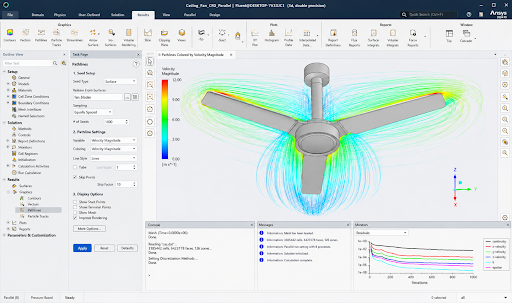
The resolution came through iterative CFD simulation paired with mould flow analysis, adjusting the blade chord, twist angle, and surface curvature simultaneously until the airflow performance, the structural integrity at the blade root, and the moulding feasibility all aligned. The final blade profile delivered the target air delivery with a surface finish the moulding tool could hold consistently across production runs.
5. Engineering for Indian Conditions: Designing Beyond the Standard Spec Sheet
Designing a ceiling fan for the Indian market is an exercise in designing for conditions that most global benchmarks do not account for. The variables are not marginal. They are structural.
Voltage fluctuation
India’s grid voltage in Tier 2 and Tier 3 markets routinely varies between 160V and 250V. A BLDC motor calibrated for 220V nominal will run hot and degrade faster at sustained 180V operation. Motor winding specifications, capacitor sizing, and thermal cutout settings all need to be validated across the actual voltage range the product will experience in the field — not the nominal spec.
Dust Ingress and Bearing Life: DFM for Indian Ceiling Fan
ASHRAE dust density data for North Indian cities during summer months exceeds most global product test standards. Ceiling fan bearing housings and motor enclosures that are not specifically sealed for high-particulate environments will see accelerated bearing wear and commutator contamination. IP rating of the motor enclosure is not optional, it is a field reliability decision.
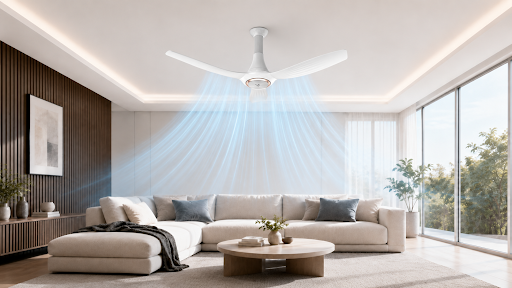
Ceiling Fan Design for Indian Room Geometry and Airflow Comfort
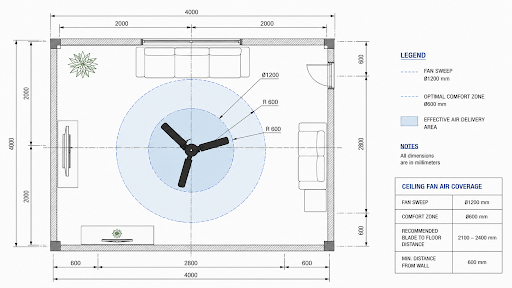
The average urban Indian bedroom is 100 to 130 sq ft, significantly smaller than the 180+ sq ft rooms that most global ceiling fan aerodynamic performance data is benchmarked against. A fan designed to deliver the right CFM for a 150 sq ft room will produce uncomfortable drought effects in a 100 sq ft room at the same RPM. Blade pitch, RPM range, and regulator step calibration all need to be validated against actual Indian room dimensions.
Surface Finish Durability: CMF Design for Indian Climate Conditions
CMF decisions for ceiling fans in India must account for UV degradation from direct sunlight in non-AC environments, repeated wet-cloth cleaning, and the colour fastness requirements of high-humidity coastal markets. Matte powder coat finishes that look premium in a product photograph will show cleaning marks within a season in a typical Indian household. Finish selection is a field performance decision, not an aesthetic one.
10+
Years in the category
CFD+DFM
Simultaneous Validation
160-250V
Design Voltage Range
100 - 130 Sq Ft
Indian Room Benchmark
6. Navigating Price Compression and BEE Regulatory Compliance Timelines
What clients need to understand before they brief a design studio
The ceiling fan category in India is mature, price-compressed, and highly competitive. In that environment, design leadership comes not from radical form departure alone, but from the ability to deliver differentiated aesthetics within tight DFM, cost, and regulatory constraints simultaneously.
“Design that cannot survive the journey from brief to injection mould to BEE certification to retail shelf is not design leadership. It is a beautiful delay.”
Ceiling Fan Product Development Cycle: Aligning Design Timelines with Tooling and BEE Compliance
GDD has worked on projects where the client’s expectation of what design could achieve in a single development cycle exceeded what the supply chain, the moulding capability, or the BIS/BEE compliance timeline allowed. Those projects are instructive. They confirm that the most valuable thing a design studio can offer a product manager is not just good ideas — it is the ability to know, early in the process, which ideas are viable and which ones will cost six months and a tooling write-off to discover.
That knowledge comes from doing the work at the intersection of industrial design, design for manufacture, and Indian market reality — not from one of them alone.
7. Partner with GDD: Streamlined Cooling Product R&D for Faster Market Launch
Product managers and R&D heads who brief GDD on ceiling fan and cooling product development get a studio that has already solved the problems their previous agency discovered in production. Fewer ECO cycles. Faster mould approval. BEE compliance built into the brief, not retrofitted after it. And a product that reaches the shelf looking exactly like what was designed.
